
Set Up Online Booking for Your Therapy Practice
How to set up online booking for your therapy practice in India: what a booking system needs, how to tie bookings to the client record, and what to look for.
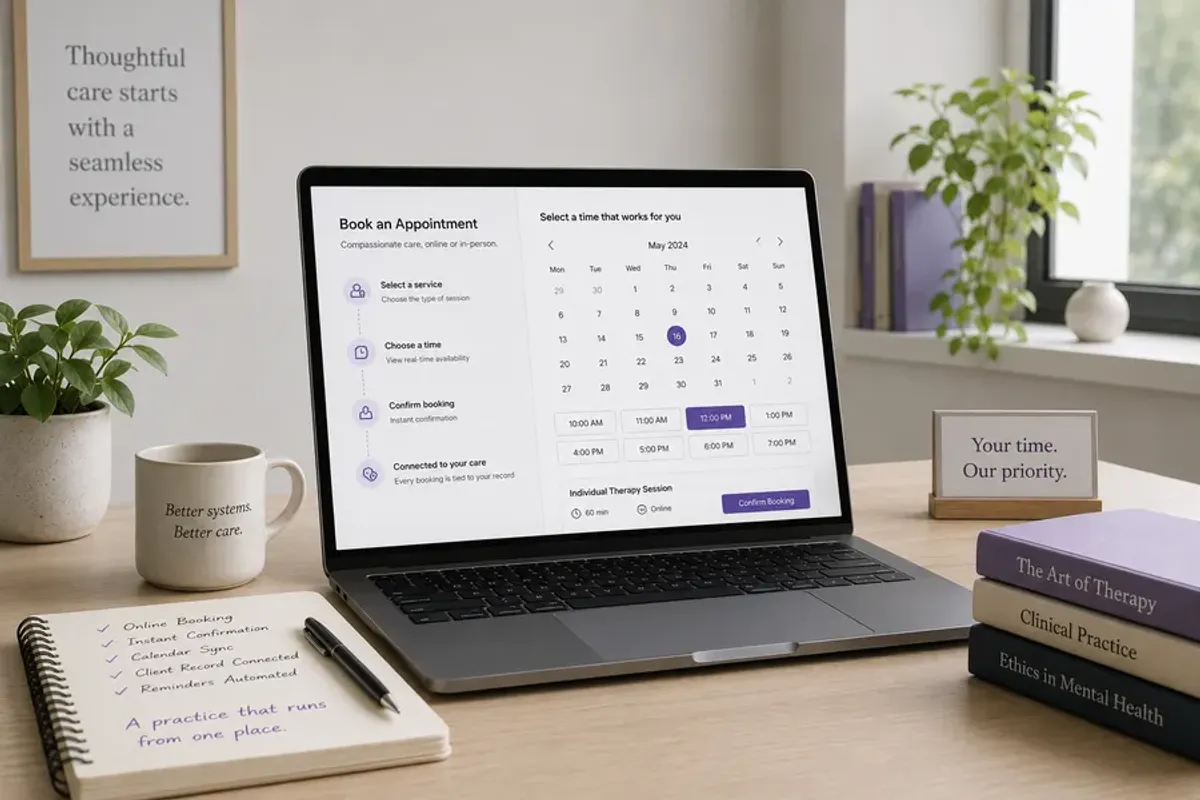
What a booking system needs, why every booking belongs in the client record, and what to look for before you choose one.
Summary
Setting up online booking for a therapy practice in India means running appointment booking, confirmation, and your calendar as one connected system, with every booking tied to the client’s record. Booking is the front door of a practice, and a system that only records the time misses most of the value. This article shows therapists, psychologists, and psychiatrists how to set up booking that works: what a booking system requires, why a booking connected to the client record matters more than a standalone calendar, how booking connects to online sessions, and what to look for before choosing a system. It is written for solo practitioners and clinics, and it treats booking not as an isolated calendar but as the entry point to a practice that runs from one place.
Table of Contents
- How to Set Up Online Booking for Your Therapy Practice in India
- What Online Booking Actually Requires
- Why No-Shows Happen, and What Helps
- Keeping Bookings Connected to the Client Record
- Online Booking for Online Sessions
- What to Look For in a Booking System
- Setting It Up
Setting up online booking for a therapy practice in India means putting appointment booking, confirmation, and your calendar into one system that ties every booking to the client it belongs to. Booking is the front door of a practice. Done well, it keeps the calendar organised and starts every client relationship in one clean record. Done as a standalone calendar, it records the time and little else.
Most practitioners begin with whatever is at hand: a calendar app, a booking confirmed over a message, notes kept somewhere else. It works until the practice fills up, bookings live in three places at once, and the calendar stops matching the records.
This post lays out how to set booking up properly: what a booking system actually requires, why a booking belongs in the client record, and how booking connects to the rest of the practice.
Good booking is more than a way to record appointments. It is a system that takes a booking, confirms it, and connects the appointment to the client’s record, without leaving the calendar disconnected from everything else.
Setting it up comes down to a few decisions.
-
Choose a system that manages every appointment in one calendar, rather than booking spread across messages and separate apps.
-
Tie each booking to the client’s record, so an appointment is never an isolated entry with no connection to the person it is for.
-
Connect online sessions to the booking, so a video consultation runs from the appointment itself.
-
Keep client details in the booking secure and hosted in India, because even a name and a session time are sensitive in mental health care.
-
Decide how you confirm and follow up on bookings, so appointments hold and the calendar stays accurate.
Each of these turns booking from a calendar into the working front door of the practice.
What Online Booking Actually Requires
A booking system for a therapy practice has to do more than hold a time slot. The requirements are practical and specific.
-
A single place to manage appointments: bookings, reschedules, and cancellations handled from one calendar rather than scattered across tools.
-
Confirmation: a client and practitioner both know a booking is set, without a back-and-forth to confirm it.
-
A connection to the client record: the appointment is tied to the client, so booking a session also places it in their history.
-
A path to the session: for online work, the booking leads to the video consultation rather than sending the client to a separate app.
-
Security: the client details attached to a booking are protected, because even a name and a session time are sensitive in mental health care.
A system that meets these turns booking into part of how the practice runs. A calendar that only stores the time leaves the rest of the work, the confirmations, the record-keeping, the follow-up, to you.
Why No-Shows Happen, and What Helps
Missed appointments are one of the largest avoidable losses in a practice, and most of them are not about a client’s willpower. They are about systems. A client who forgot. An appointment booked weeks ago and never confirmed since. A calendar that no one is watching.
The habits that reduce no-shows are practical: confirm every booking at the time it is made, keep the calendar accurate so nothing is double-booked or lost, and remind clients of upcoming sessions through whatever channel your practice uses. Reminders sent close to the session are widely regarded as the single most effective step, and a practice can run them as part of its own routine. For the full picture of why sessions get missed and how to reduce them, see our guide on how to reduce no-shows in your therapy practice.
What a booking system contributes is the foundation underneath those habits: one accurate calendar, every appointment tied to the client it belongs to, and a clear record of what is booked. When the calendar is the single source of truth, following up on a session is straightforward, because the information is in one place instead of scattered.
Keeping Bookings Connected to the Client Record
A booking that lives apart from the client’s record is a fragment. The appointment sits in a calendar, the client’s notes sit somewhere else, and joining them is manual work repeated before every session.
Booking works better when every appointment ties to the client it belongs to. Booking a session places it in the client’s record, alongside their notes and history. Reviewing the day means seeing each client next to the time booked, with their history one click away. Nothing is booked in isolation, and nothing has to be reconciled afterwards.
This connection is also what lets booking work as a practice grows. In a clinic, front desk and admin work from a shared team calendar that spans the practitioners, while access stays governed by role, so each booking is open only to the people whose role allows and every appointment stays tied to the client’s record. For a closer look at running scheduling and appointments as one connected system, see our scheduling and appointments page.
Online Booking for Online Sessions
For a practice that runs sessions online, booking and the session itself should be one flow, not two tools. A booking that produces a separate video link in a separate app is two things to manage and two places for something to go wrong.
Booking done well generates the online session from the appointment. When a session is booked, the secure video link comes from the booking itself, live for the session and tied to the client’s record. The appointment and the video are one continuous thing, so an online session is as organised as an in-person one. For a fuller treatment of what secure online sessions require, see our telehealth and secure video page.
What to Look For in a Booking System
Before choosing a booking system for a therapy practice in India, put it through a few questions. A system built for the work answers them clearly.
-
Does it manage every appointment in one calendar, or will booking still be spread across separate tools?
-
Does each booking tie to the client’s record, so appointments and history stay connected?
-
Can access be controlled by role as the practice grows, so each person sees only what their role allows?
-
Does it connect to online sessions, so a video consultation runs from the appointment?
-
Is client data secure and hosted in India, so the details attached to a booking are protected under Indian law?
A system that answers these is set up to run the front door of a practice. One that only stores appointment times is a calendar, and the rest of the work stays manual.
Setting It Up
Setting up online booking is really the decision to run booking and the calendar as one connected system, tied to the client record, instead of stitching separate tools together yourself. Once booking, confirmation, and the client record sit in one place, the front door of the practice is organised.
Aroha runs scheduling and appointments as one connected system. Every appointment is booked and managed in one place, and each appointment ties to the client’s record so bookings, notes, and history sit together. Online sessions run on secure, time-bound links generated from the appointment itself. Access is controlled by role and by client throughout, so bookings and records are open only to the people whose role allows, and in a clinic, front desk and admin work from a shared team calendar across practitioners. Client data is encrypted and hosted on servers in India. The same connected system works whether you practise on your own or in a clinic with several practitioners.
The front door of a practice sets the tone for everything behind it. Aroha publishes practical guides like this one for mental health practitioners in India, written for the way practices here actually run. Follow the blog for the rest of the series.
The information in this post is provided for general awareness and is not legal advice. For guidance specific to your practice’s obligations, consult a qualified legal professional.
Related Articles

How to Reduce No-Shows in Your Therapy Practice
Therapists lose hours every week to missed sessions. Here is why no-shows happen in mental health practice, and what you can do about it to reduce them. This post discusses five effective ways to reduce no-shows in your practice.
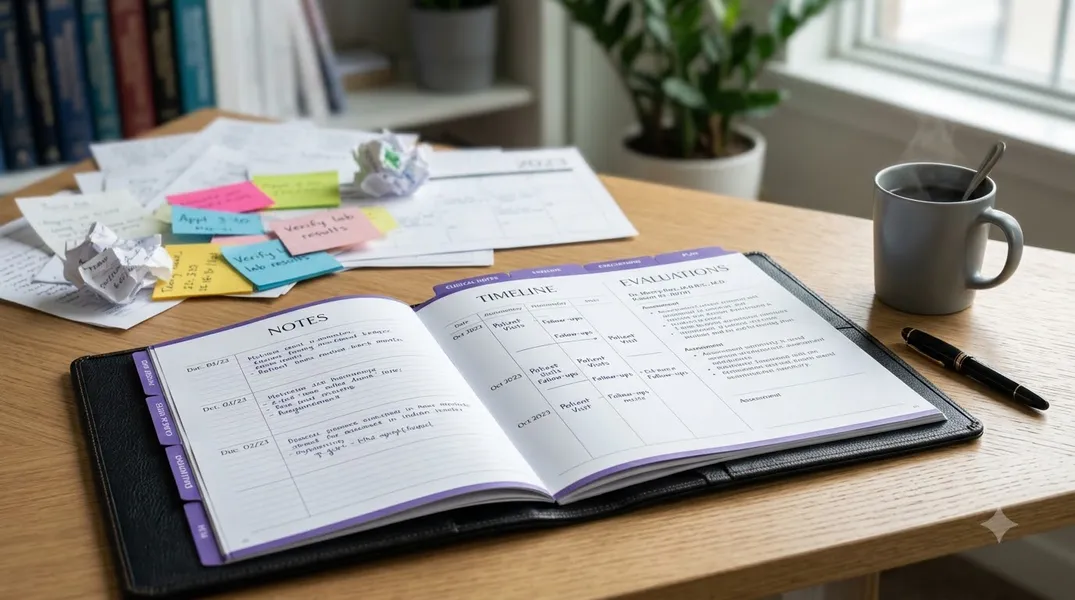
How to Manage Therapy Clients Without Losing Track
Manage therapy clients without losing track: keep every client in one record, unify notes and scheduling, and protect client data. A practical guide for India.

What to Look for in Mental Health Software Built for India
Mental health software built for India keeps client data on Indian servers, is DPDP-ready, and fits how care is practised here. What to look for, and how to tell.